Showing posts with label Health and Development. Show all posts
Showing posts with label Health and Development. Show all posts
Thursday, 15 May 2014

Thursday, 27 March 2014
Kenyan children with disabilities face social stigma
 |
Kenyan children with disabilities face social stigma
http://vimeo.com/87490816
About this video
"07 Aug 2013 | by Martha Nyambura | ì | Civil Society - Original Feature Out of the one billion people living with disability in the world 80 percent are from the developing world with one percent of them being children. For many children with disability life is even harder in the developing world. Stigma and poverty limit their access to essential health services to enable them lead a normal life. However in Kibera, one of Kenya’s most populated slum, children with disability have found a new lease on life." |
The Nuru experience in Kenya, from garbage dump to model farm
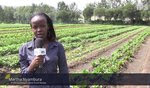 |
The Nuru experience in Kenya, from garbage dump to model farm
http://vimeo.com/83680662
About this video
"18 Jun 2013 | by Martha Nyambura | Civil Society - Media Talks - Original Feature Contribution by IPS and IPSTV journalist Martha Nyambura to the IPSTV Food and Media Talks panel “Will forthcoming economic boom change Africa’s rural backyard?” held at FAO, Rome, on Tuesday June 18th 2013. The clip contains Martha Nyambura’s video report “The Nuru experience, from garbage dump to model farm” and her following contribiution from Nairobi (Kenya) via Skype." |
Wednesday, 2 October 2013
Mother mentor model to reduce HIV infection
By Wairimu Nyambura
Sept 25/2013
A new initiative that aims to reduce mother to child HIV
transmission is underway in Kenya.
The program dubbed “mentor to mother” employs mothers who
are already HIV positive to act as health care providers for pregnant HIV
mothers and new mothers.Dr. Maxwell Omondi, the head of the initiative said the program aims to complement the services of nurses and doctors government in health facilities in the country.
“The role of nurses in most health facilities has increased over the years but their numbers have not hence this program aims to bridge the gap in terms of quality health delivery,” said Dr. Omondi.
He added that the program model puts women at the centre of HIV reduction efforts in Kenya.
He added that the programme is having a positive impact, by reducing HIV transmission from mother to child.
“Adherence levels to Anti Retroviral (ARV) drugs used to treat HIV has increased with more babies born without the virus,” notes Peris Njoki one of the mentor mothers overseeing five mentor mothers in the program at the slum based Mathari North Health Centre in Nairobi.
However, Ms. Njoki admits that there are challenges with the mothers in the program brought on by poverty.
“Most women in the program are forced to relocate from one slum to the other due to challenges in paying rent making it difficult to adhere to the program,” she says.
There are over 1.4 million pregnant women in low and middle income countries infected with HIV most of them from Sub-Saharan Africa. The mentor to mother program rolled out in parts of Nairobi and Western Kenya, is now being promoted in nearly 100 government health facilities.

Thursday, 25 July 2013
Giving Herbal Medicine Legal status in Kenya
By Wairimu Nyambura
Nov 2010
The lack of proper legislation for
traditional medicine and medicinal plants by the government continues to expose
three quarters of Kenyans who depend on traditional medicine to quacks
operating within the lucrative herbal industry.
The failure by the
government to table the three year old bill dubbed 'The traditional herbal medicine
and medicinal plants Bill 2008', continues to put at risk not only the health of the public but also
indigenous knowledge of traditional herbalist that dates back to the cradle of
mankind, says Dr.Esther Matu, a traditional medicine and drug researcher at the Kenya Medical Research Institute -KEMRI.
"It is crucial
for government to put in place the relevant legal framework and policy to
protect the public from quackswho take advantage of needy Kenyans who cannot
access conventional medicine mainly because it is expensive,"said Dr.Matu who was addressing a Science cafe forum at a Nairobi hotel.
The traditional herbal medicine
and medicinal plants Bill 2008, aims at giving local
herbalist the chance to conserve the bio diversity of medicinal plants that are
slowly becoming unavailable mainly due to changing climatic conditions.
It also aims at protecting intellectual property rights of herbalist, whose skills are mostly acquired through the family lineage and enable policy and regulatory framework for research and development.
It also aims at protecting intellectual property rights of herbalist, whose skills are mostly acquired through the family lineage and enable policy and regulatory framework for research and development.
The Pharmacy and poisons board, in
the past has conducted crack downs on counterfeits medicine operating in the
country.
According to the boards recent publication, most herbalists lack the proper equipment to eradicate impurities in the herbs they use since most are still dependent on traditional methods of producing medicinal drugs. The results are high levels of toxicity in the end product for consumers. The board plans to come up with proper guidelines aimed at regulating counterfeits in the country.
According to the boards recent publication, most herbalists lack the proper equipment to eradicate impurities in the herbs they use since most are still dependent on traditional methods of producing medicinal drugs. The results are high levels of toxicity in the end product for consumers. The board plans to come up with proper guidelines aimed at regulating counterfeits in the country.
Proper legislation would ensure high standardization levels to curb the issues of toxicity in the drugs been consumed, notes the board.
Traditional herbalists fall under the ministry of gender and social services however the bill has been drafted by the Ministry of state for Planning, National Development and Vision 2030 irking stakeholders in the industry who want it under the Ministry of Health to speed up legislation.
Traditional herbalists fall under the ministry of gender and social services however the bill has been drafted by the Ministry of state for Planning, National Development and Vision 2030 irking stakeholders in the industry who want it under the Ministry of Health to speed up legislation.
Medical herbalist Dr. Jack Githae,
says the lack of political good will has created an impediment in the
legislation of the bill.
He notes that proper legislation will help remove stigmatization of the herbal industry as most herbalists will be vetted to protect the public from those out to make a quick buck.
He notes that proper legislation will help remove stigmatization of the herbal industry as most herbalists will be vetted to protect the public from those out to make a quick buck.
"The herbal industry has always been viewed
negatively with some Kenyans associating it to witch craft but legislation will
help to subject traditional medicine to conventional scientific research that
will help alleviate any stigma in the industry."
Dr. Githae says the fear by
herbalist that their indigenous knowledge could fall to the wrong
hands, has led low documentation of treatment methods forcing many herbalists to rely on testimonials from patients to help promote their
work.
The bill, he says, will protect
intellectual property and empower traditional healers.
He cites the need to change the current medical curriculum in local universities to incorporate traditional medicine and tap this wealth of indigenous knowledge.
Dr. Githae boasts of having a monogram of 7, 500 medicinal plants in place, he is also a regional member of traditional medicine under the World Health Organisation(WHO).
He cites the need to change the current medical curriculum in local universities to incorporate traditional medicine and tap this wealth of indigenous knowledge.
Dr. Githae boasts of having a monogram of 7, 500 medicinal plants in place, he is also a regional member of traditional medicine under the World Health Organisation(WHO).
According to WHO,one way of
validating medicine is through applied research, based on prolonged usage. Dr.
Githae claims that traditional medicine has met this criteria and the lack of
legislation keeps on delaying much needed growth of the industry.
Presently
Nigeria boasts of having patented a drug that treats sickle cell anemia, while
Kenya is in the process of patenting a drug that treats oral and vaginal herpes
simplex called Anti-HSV.
Stakeholders say that the
legislation of the bill will protect the industry from vested interests who
exploit the medicinal plants in the country, while communities from where the
plants are harvested don’t enjoy the economic benefits.
According to a recent publication,
industrial enzymes from microbes used for fading jeans were discovered in Lake
Baringo, Rift valley and they are estimated to be worth USD600 million however
the community is yet to reap any benefits.
The Bark Prunus Africanas
harvested from Mt. Kenya has been used to manufacture drugs for treatment of
prostrate and gland cancer yet there have been no reports of the community benefiting economically from the exportation of this plant.
This is the story of exploitation in most parts of the country where medicinal plants grow according to the report.
This is the story of exploitation in most parts of the country where medicinal plants grow according to the report.
The report notes that most countries are raking in billion of dollars through the herbal industry.
For example Western Europe made profits worth 375 billion in 2003 and 2004.
China had sales totaling to 1050 billion in 2005 while Brazil in 2007 made 12
trillion from the herbal industry.
As such the 'Traditional herbal medicine and medicinal plants Bill 2008' will help in the documentation of traditional medicinal plants as most will be subjected to scientific research and analysis ensuring that drugs are administered in the right dosage and high quality standards are maintained to minimize health risks to the public, says Dr.Matu.
As such the 'Traditional herbal medicine and medicinal plants Bill 2008' will help in the documentation of traditional medicinal plants as most will be subjected to scientific research and analysis ensuring that drugs are administered in the right dosage and high quality standards are maintained to minimize health risks to the public, says Dr.Matu.
Wednesday, 24 July 2013
A Tale of Three Cities
By Wairimu Nyambura
Nov 2010
A new era of democracy had dawned in a country where
only one voice is law. To crown this six years of multiparty democracy, is the staging of a teacher’s and bank strike. But with the blowing of this wave of democratic freedom, a new enemy emerges, terrorism.
A terrosits bomb rips apart the co-operative building and the United States Embassy in the central business district, on the 7th of August 1998 in Nairobi, Kenya.
A terrosits bomb rips apart the co-operative building and the United States Embassy in the central business district, on the 7th of August 1998 in Nairobi, Kenya.
On the Northern side of Eastern Africa; Democracy
and the sanctity of life takes a back seat as two brothers’ war. The city outskirts are engulfed in wailing as
mothers, daughters, sisters and wives take the head spear in the home as the
men lay sprawling in war fields; the Ethiopia/ Eritrea border dispute 1998.
Further in the Middle East, in the fields of
Afghanistan, lay a quiet enemy with an explosive jab, landmines, left as
forgotten evidence of war, 1998.
It is in this period of changing tides; two years
before the new millennium that Douglas Sidialo, a typical Kenyan man, finds
himself, trying to arch out a living for his family in post democratic Kenya. This changing tide would flow to the booby trapped
mine fields of Afghanistan, where thirteen year old Viroz Azizda plays. Seven year
old Aynalem Zenebe from Ethiopia would feel the effects of this changing tide
as she sleeps innocently in the comfort of her home.
This is a tale of three cities, in the same period
of time, with one face.
Surrounded by the pounding sounds of the
Thika-Nairobi highway construction; regional representatives from the East
African region are treated to the massive taste of superhighway Kenya, the
juice that is to propel the economy to greater heights. But what has gathered
this lot at Kenya School of Monetary Studies (KSMS) is not infrastructure but
accessibility of such services and other matters that concern the forgotten
faces of persons with disability.
It is in this meeting organized by handicap
international that I meet the three, Douglas Sidialo from Kenya, Aynalem Zenebe
from Ethiopia and Viroz Azizda from Afghanistan, what binds them together is
that there are all victims of bombs, landmines and cluster submunitions. There are here as survivors and advocates to
urge governments to put in place a national action plan on victim assistance.
“I now understand my rights”, she says in her
heavily influenced Amharic English. Aynalem Zenebe is now 18years old; she is
just about to graduate from high school. As she pours her heart out to a room
full of people some of whom have walked in her shoes, she struggles to express herself
as she responds to questions from the participants.
Her journey has not been easy, at the age of seven,
Eritrean soldiers threw a cluster munitions near her home in the town of
Mekele. Her family was injured but she felt the brunt of the war. Most of the details of her ordeal are fuzzy,
but the magnitude of what had taken place became evident when she realized she
couldn’t play normally like children her age.
One of her legs was amputated. Through help from NGOs,
Aynalem was able to get a prosthetic leg which helps her in mobility. She is
now a passionate ban advocate.
Viroz understands when Zenebe calls on governments
to implement policy on victim assistance.
As he narrates his ordeal, he talks of discrimination and the lack of
support from the society as most people did not understand him. As an energetic teen, Viroz would get into
mischief as most boys his age did. It is during one of these expeditions in the
Afghan fields, that a landmine would explode.
What would follow later would be several months of
hospitalization, and in the process he lost one of his legs from the knee and
the other from the thigh. His life would take on a new chapter that he and his
family had never imagined.
“There is no deadline on victim assistance “, he
says as he addresses the participants. Citing his own example and that of a
relative, he stresses the need to offer psychological support to people faced
with disability.
Douglas Sidialo, Couldn’t agree more, to him having
a strong faith base was core in dealing with bitterness and anger at terrorists
who had taken him from the light into darkness. He may need a guide to help him
move around, but Sidialo has achieved feats that those with sight cannot claim.
He is the first black man to finish the 12,000km
‘Tour d’ Afrique cycle race from Cairo to Cape Town in only 95 days. He has
gone as far as climbing Mt. Kenya and Mt.Kilimanjaro. After losing his sight,
Sidialo developed a love for sports working closely with the Paralympics team
in Kenya.
There are over 650million people in the world with disability
(PWDs), a large percentage from developing countries. Access to basic health
care for persons with disability in developing countries remains at an all time
low of 2%, with 98% of disabled children unable to acquire basic primary
education.
As the three tell their story
it is apparent that a lot needs to be done to increase access and affordable
emergency medical care for victims. Most developing countries according to H.I
lack budgetary allocations for PWDS with most relying heavily on donors and
NGOs to provide assistive devices.
According to the Convention on the Rights of Persons
with Disability (CRPD) it is the right of Pwds to access health, Education and
financial services without discrimination, Kenya has ratified the CRPD.
Sidialo cites mobility for PWDS as a major challenge;
he says the likelihood of one falling into a pool is high as most building are
not constructed to cater for pwds. The disability act 2003, stipulates that
persons with disability are entitled to a barrier- free and disability-friendly
environment to enable them to have access to buildings, roads and other social
amenities, and assistive devices and other equipment to promote their mobility.
The Mine Ban Treaty celebrates its 10th
anniversary this year.
cluster bomb, or
cluster munition, is a weapon containing multiple explosive submunitions. These
containers are dropped from aircraft or fired from the ground and designed to
break open in mid-air, releasing the submunitions and saturating an area that can
be the size of several football fields. Anybody within that area, be they
military of civilian, is very likely to be killed or seriously injured.-Source
http://www.stopclustermunitions.org
Published in Nov 2010
When fame does not mean Glory- A tale of TB and two men
By Martha Nyambura
In his Iruru village in Kapsabet town, Daniel Ngetich’s name rests easy on the lips of villagers, like those of athletics champions Bernard Lagat, Robert Cheruiyot, Wilfred Bungei and Pamela Jelimo.
They are all the sons and daughters of the village but for this 38 year old farmer, it is neither his prowess on the athletic tracks nor his ability in farming that has brought him to the limelight amongst his kinsmen.
Miles away in Kangaita village in Kerugoya County is Simon Maregwa, whom Mr. Ngetich shares the fame that they were propelled into by the most unlikely of circumstance: defaulting on their TB medication, an act that would take them behind bars.
The 54 year old Mr Maregwa, is a father of two who earns his living by weaving baskets. His is an ordinary life. His Kerugoya district hardly makes headlines; it is not endowed with athletic prowess neither are songs of their farming skills making it to the charts but recent events surrounding him has made Kenyans take notice of his Kangaita village tucked in the slopes of Mount Kenya.
It all began in August last year. Usually, this is the time when the view of the Rift Valley escarpment comes to life; the maize crops trades in their green colour for a brownish one in anticipation of harvest. Farmers are abuzz preparing their barns to carry the bumper harvest.
On one August morning, Mr Ngetich was in his farm getting his crops ready for harvest when policemen came calling. In full view of his kith and kin, he was arrested ostensibly for failing to finish his dose of TB medicines.
“These drugs are not like the malaria ones, this one make you drunk than the normal beer,” he recalls of the medication.
In the case of Mr Maregwa, he was arrested at the Kerugoya District Hospital where he had been called in for routine checkup. When the nurse noticed that his TB medications were not all utilized, policemen were called in.
“If you have a stomach problem or headache,” argues Mr Maregwa, “and you take medications for a few days and feel better, you stop taking the drugs. I thought this is the case with the TB medicines, I took them for a while and felt better.”
This marked the beginning of the two men’s time in the limelight that would see them hog newspaper space and television airtime. Overnight, they became the talk of the country.
They were later handed an eight months jail sentence when the case was concluded. However, they did not serve the full sentence as intervention from human rights advocate earned them freedom midway.
It is their plight that recently brought together health rights’ advocates at a Nairobi hotel to campaign for a humane approach to the treatment of TB patients.
Kenya’s TB burden is the fifth highest in Africa and Kenya is ranked 13 on the list of 22 countries that bear the highest burden of the disease in the world, according to the Global TB Report of 2009 by the World Health Organization (WHO).
Figures from WHO indicate that the country records 132,000 new TB cases every year. It has over 500 confirmed cases of multi drug resistant TB (MDR-TB) , according to the ministry of public health’s division of leprosy, TB and lung disease but WHO estimates this number to be in its thousands.
Dr. James Gachengo, coordinator of DR-TB at the division of leprosy, TB and lung disease says that defaulting on TB medication threaten gains the country has made in combating the disease.
He notes that those who default on treatment are likely to develop resistance. This means that they are likely to infect others with MDR-TB, which costs over 1.5 million shillings to treat a single case.
However, the activists are against locking up defaulters. Imprisonment has contributed to stigma against many people who may have TB, fearing to come out in the open, says Anne Rono of National Empowerment Network of People living with HIV in Kenya- NEPHAK in Nandi County.
Ms Rono says there is need to come up with creative ways of ensuring that TB patients have the right support from their families and the community to ensure they finish the dose.
In fact, there is concern that this could lead to spread of the disease in prison when the defaulters are incarcerated.
Kenya’s prison capacity stands at 22, 000 and currently there are over 49,000 prisoners, which means that the prison setting may in the long run contribute to the spread of TB since most prison cells do not have isolation wards.
Poor information on TB management and stigma; with TB linked to HIV infection lead many to shy away from accessing treatment, says Nelson Otuoma of NEPHAK.
The TB medications require that many patients have balanced meals while taking the drugs but poverty often makes this difficult, adds Mr Otuoma.
There are examples within Africa, where human rights based approach to treatment is being used. South Africa is amongst them. It has developed policy guidelines on the treatment of TB, the decentralized policy for MDR-TB treatment and care that uses, says Agneeszka Wlodarski an attorney at section 27- a provision in South Africa’s constitution that advocates for the right to access health.
The policy is based on the successful pilot project that incorporated a decentralized treatment that involved the community in treating MDR-TB, which saw more patients getting treatment and adherence to medicines was high.
“TB patients should not be punished for having the disease but we need to examine the reason behind the defaulting to try and stop infection, prison cells are ill- equipped to guarantee quality of care and adherence,” notes Ms. Wlodarski.
The TB advocates are calling on a more pragmatic approach to effectively deal with TB at community level, that involves community sensitization, investments in education and information to help patients choose to complete treatment themselves and develop health systems that respond to patient’s needs.
The Kenyan government is currently conducting training programs in 12 regions in a move to train 25 health care workers after realizing that most lack information on the management of MDR-TB, says Dr. Gachengo.
The training is meant to form clinical teams in the health centers to deal with the management of MDR-TB as per new requirements on TB care.
The teams will work on bringing down defaulting cases, through enhancing follow ups and managing side effects resulting from the TB medications.
The clinical teams will also have social workers who will carry out follow up and health education to ensure that even before patients are put on treatment they are advised on what to expect while on TB treatment.
(This article was first Published in the MESHA website in Sept 2011)
Saturday, 30 March 2013
Kenyans embrace clinical trials
By Martha Wairimu Nyambura
AfricaSTI.com, Nairobi
AfricaSTI.com, Nairobi

Kenyans have overcome the stigma that hitherto prevented them from participating in clinical research trials as they now make themselves readily available.
Omu Anzala of the Kenya Aids Vaccine Initiative (KAVI) said one of KAVI’s trial sites has managed to recruit 40 volunteers to participate in an ongoing AIDS vaccine trial within three months, beating the set deadline of six months.
He said it took more than one year to enroll 18 volunteers needed for the first clinical trial in the country in 2000.
Kenya: Shortage of Cornea for Transplant
http://www.wfsj.org/files/file/resources/documents/ScienceAfrica/sia20.pdf
Kenya: Shortage of Cornea for Transplant
By Wairimu Nyambura
ScienceAfrica Correspodent
Jovial and full of life,14 year old Maureen Wanjiru leans on her mother and playfully at the lobby of Dr Jyotee Trivedy, senior ophthalmologist and head of medical services at the Lions SightFirst Eye Hospital
in Nairobi, Kenya. Her right eye tightly shut, she brushes off the specks of tears pushing against her closed eye with the back of her hand. Two weeks earlier, she received her first corneal transplant. . read .more http://www.wfsj.org/files/file/resources/documents/ScienceAfrica/sia20.pdf
Kenya: Shortage of Cornea for Transplant
By Wairimu Nyambura
ScienceAfrica Correspodent
Jovial and full of life,14 year old Maureen Wanjiru leans on her mother and playfully at the lobby of Dr Jyotee Trivedy, senior ophthalmologist and head of medical services at the Lions SightFirst Eye Hospital
in Nairobi, Kenya. Her right eye tightly shut, she brushes off the specks of tears pushing against her closed eye with the back of her hand. Two weeks earlier, she received her first corneal transplant. . read .more http://www.wfsj.org/files/file/resources/documents/ScienceAfrica/sia20.pdf
Subscribe to:
Posts (Atom)